Writing Task 1: How to Stay Consistent with Short Messages
How I organised TCF Writing Task 1 by question type, covered the required information and built reusable language
My scores and overall approach
Here is my first TCF writing review.
My writing scores across four exams were: 13 → 13 → 17 → 17.
My first two writing results were B2, and the last two were C1. Across those exams, I kept refining both my writing and my thinking. I hope some of this is useful to you.
Following the order of the exam, I will start with Task 1.
Writing improved relatively quickly for me. Once I had a method and a lot of writing practice, I was able to get started and improve much faster.
Why I organised Task 1 by type
Of the three TCF writing tasks, Task 1 felt the most flexible and the hardest to make truly stand out. That is why I believe it is worth writing one Task 1 response almost every day. Its score contribution is not the highest, though, so adjust the amount of practice to your own situation.
In the later stage of each exam cycle, I practised one complete set of writing tasks every day. It took me about 35–40 minutes to write all three responses. I then used AI for correction and refinement during the remaining 20-plus minutes. On most preparation days, writing took about an hour, leaving the rest of my time for speaking.
Organising types and opening templates
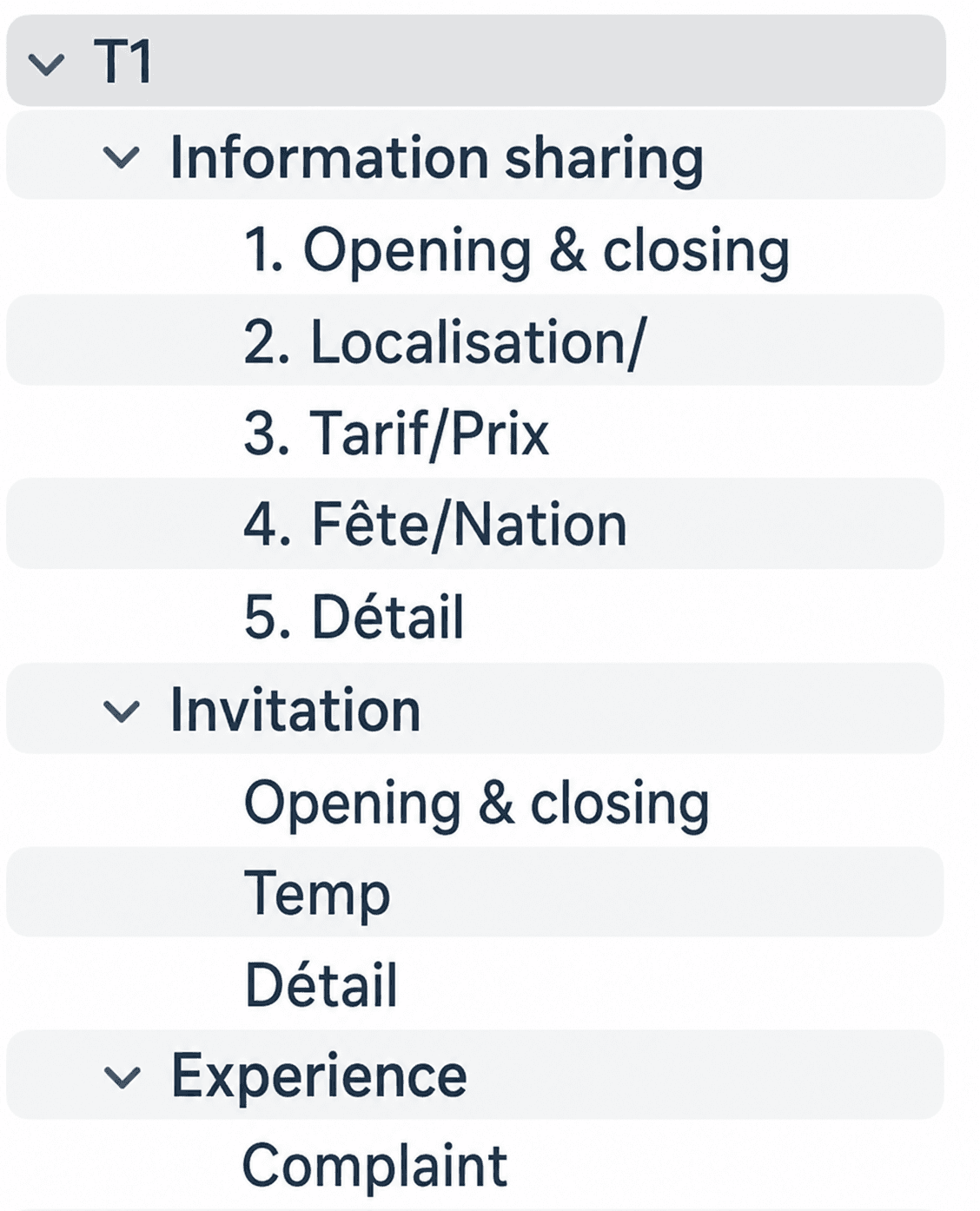
At first, I simply picked whichever Task 1 question I saw that day, wrote it, corrected it and put it aside. After writing more, I realised I had not really absorbed many of my earlier responses. I eventually organised them by question type and writing elements, roughly as shown in the image.
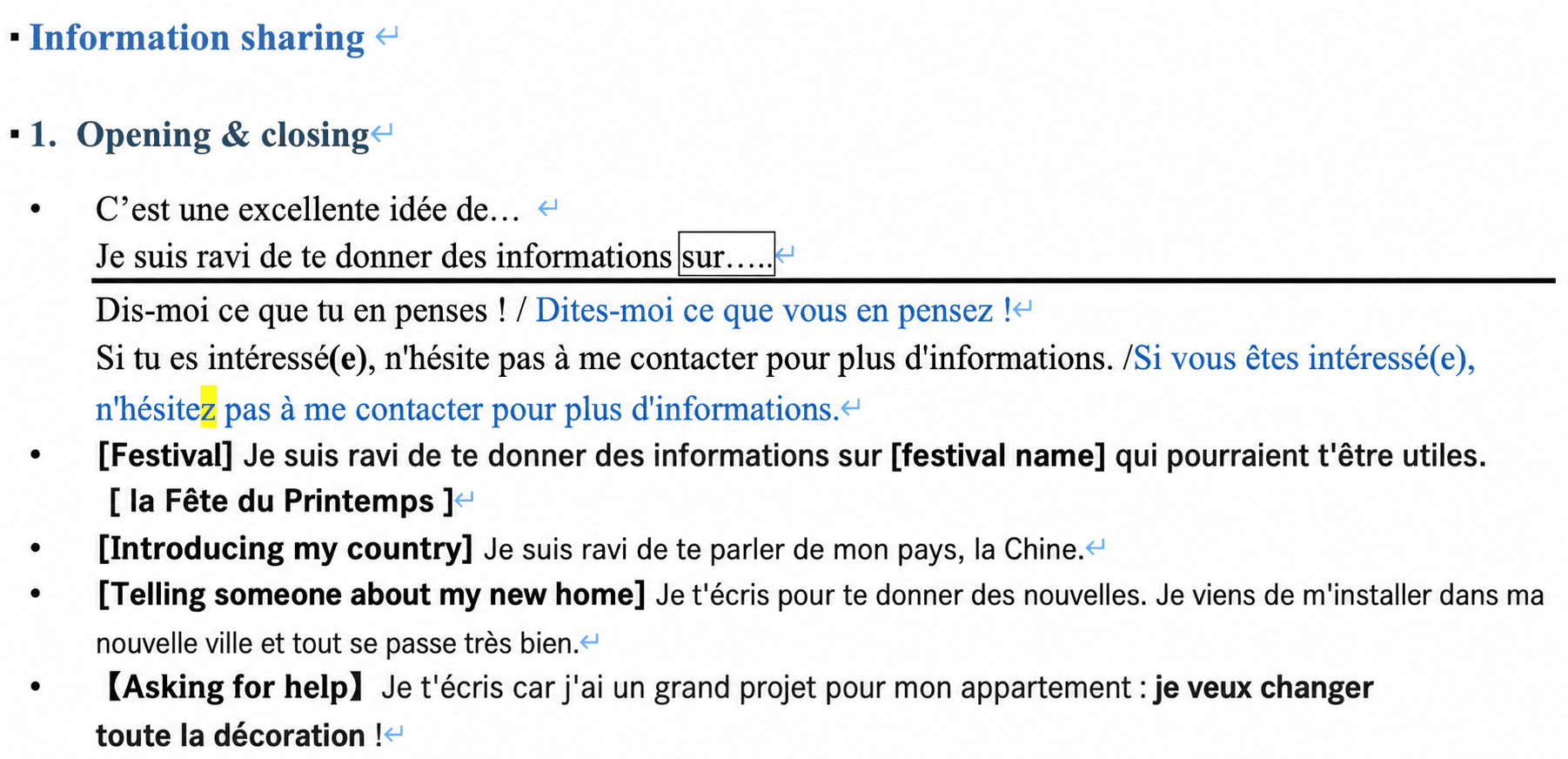
For the opening of Task 1, you can prepare several types of introduction in advance and match the right one to the question. Here is the opening and closing I used for an information-sharing Task 1:
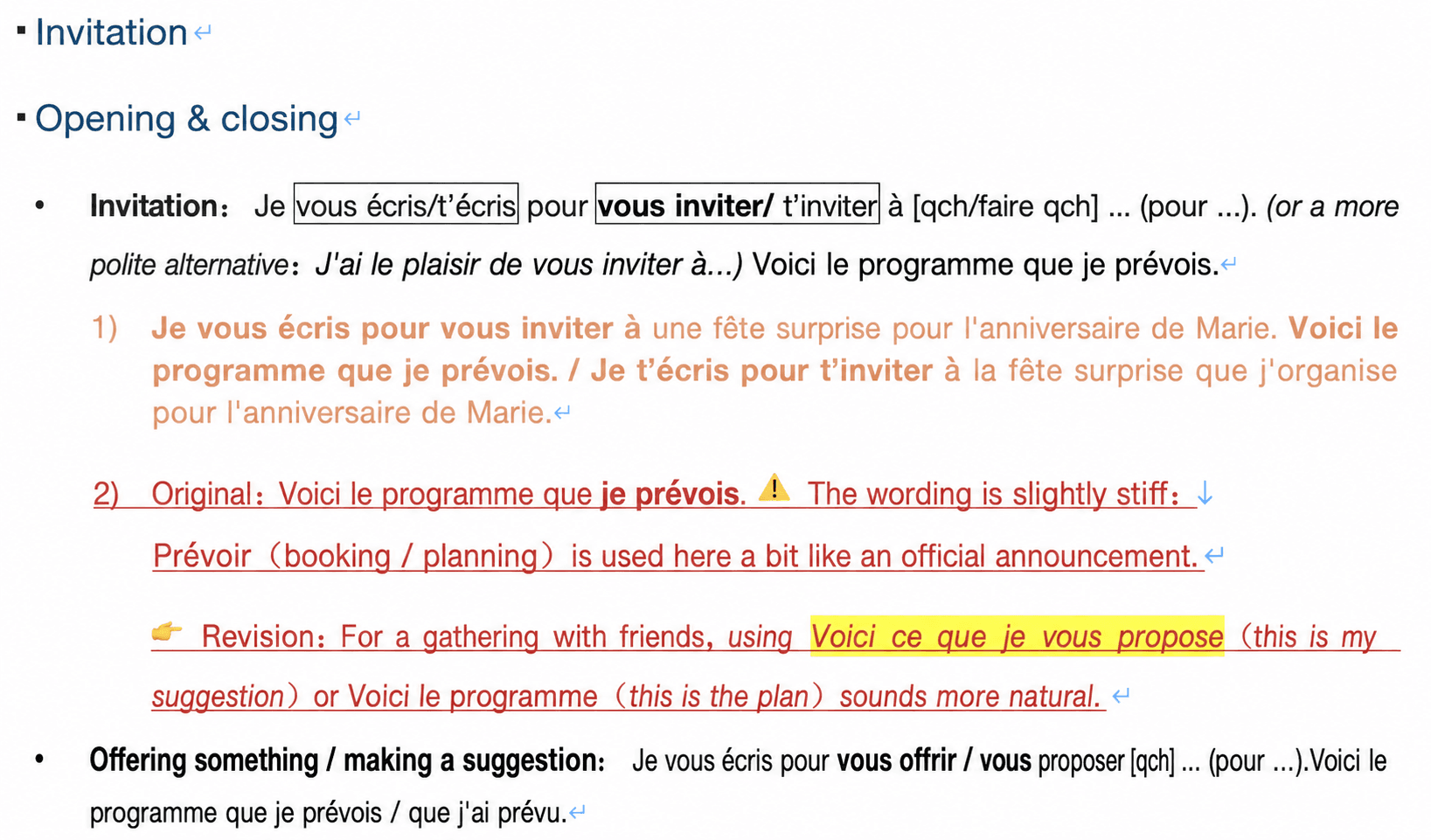
Here is an opening for an invitation Task 1:
After each day of writing, I split the corrected answer into an opening, topic details (place, time and other information) and a closing. I then reused those parts in later prompts. Because the sentences came from my own answers, they were easier to remember and did not sound like one fixed template.
Turn specific details into reusable language too
The concrete information in Task 1 can also become part of your language bank. In my information-sharing responses, questions often asked me to introduce my country to a friend or describe a festival we celebrate.
If you have already written about that kind of information, had it corrected and extracted useful language to memorise, you can adapt it quickly in the exam.
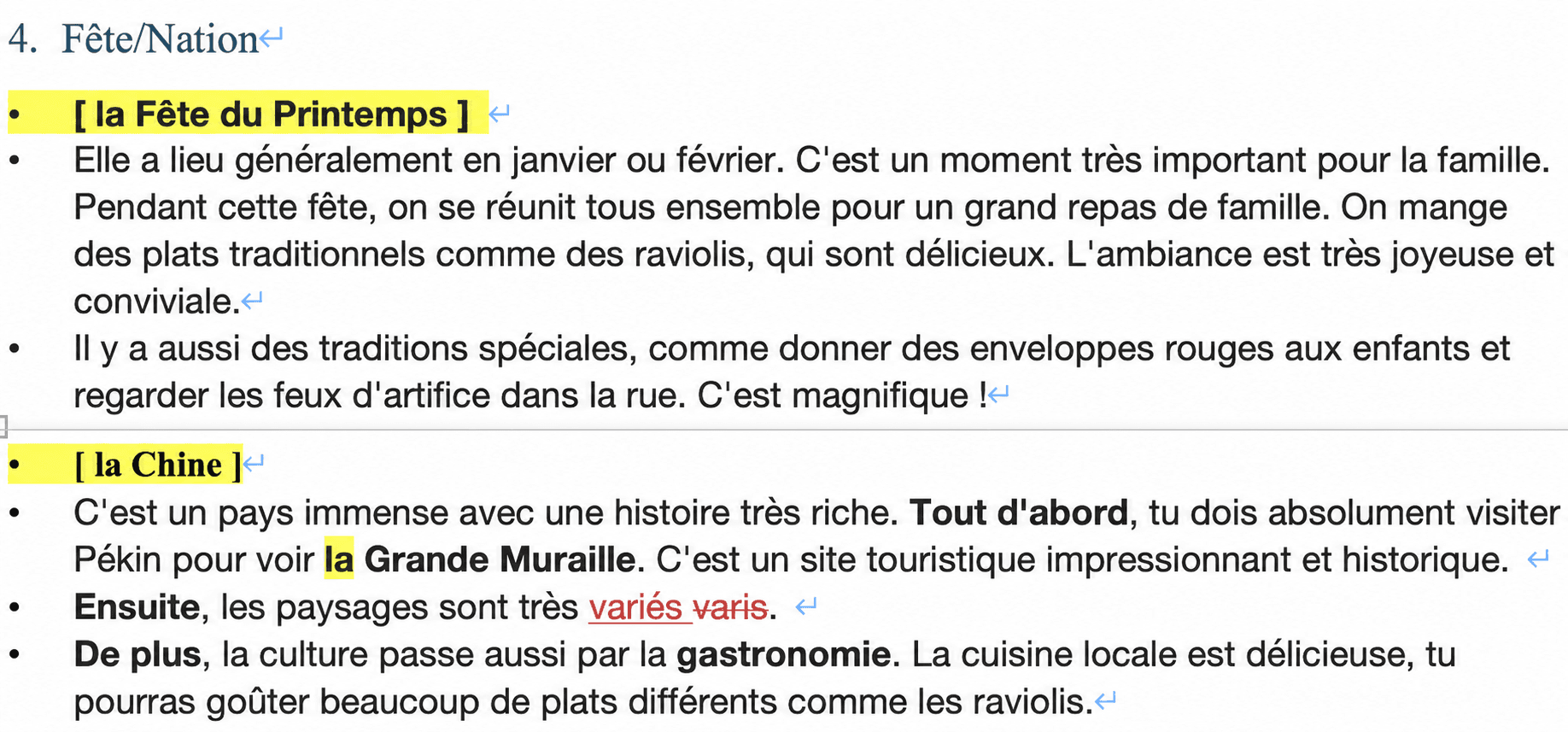
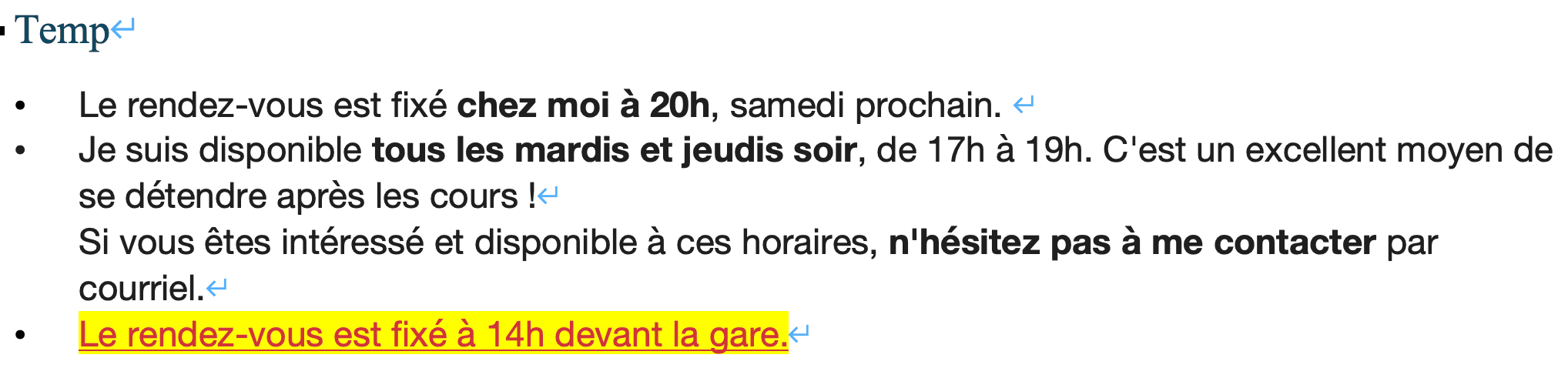
The same applies to writing elements about time:
The way I think about it now
Task 1 writing is like building a house. First, prepare different kinds of doors (openings), beams and supports (writing elements), and roofs (closings). Then, when the exam asks you to design a particular kind of house, combine the materials you have prepared until the result looks solid. That is how you become a capable builder.
I hope everyone who reads this can become an excellent designer—or bricklayer.
Personal study notes, not official TCF guidance.