Writing Task 3: Argumentation and More Advanced Expression
How I approached depth of argument and more natural expression in TCF Writing Task 3
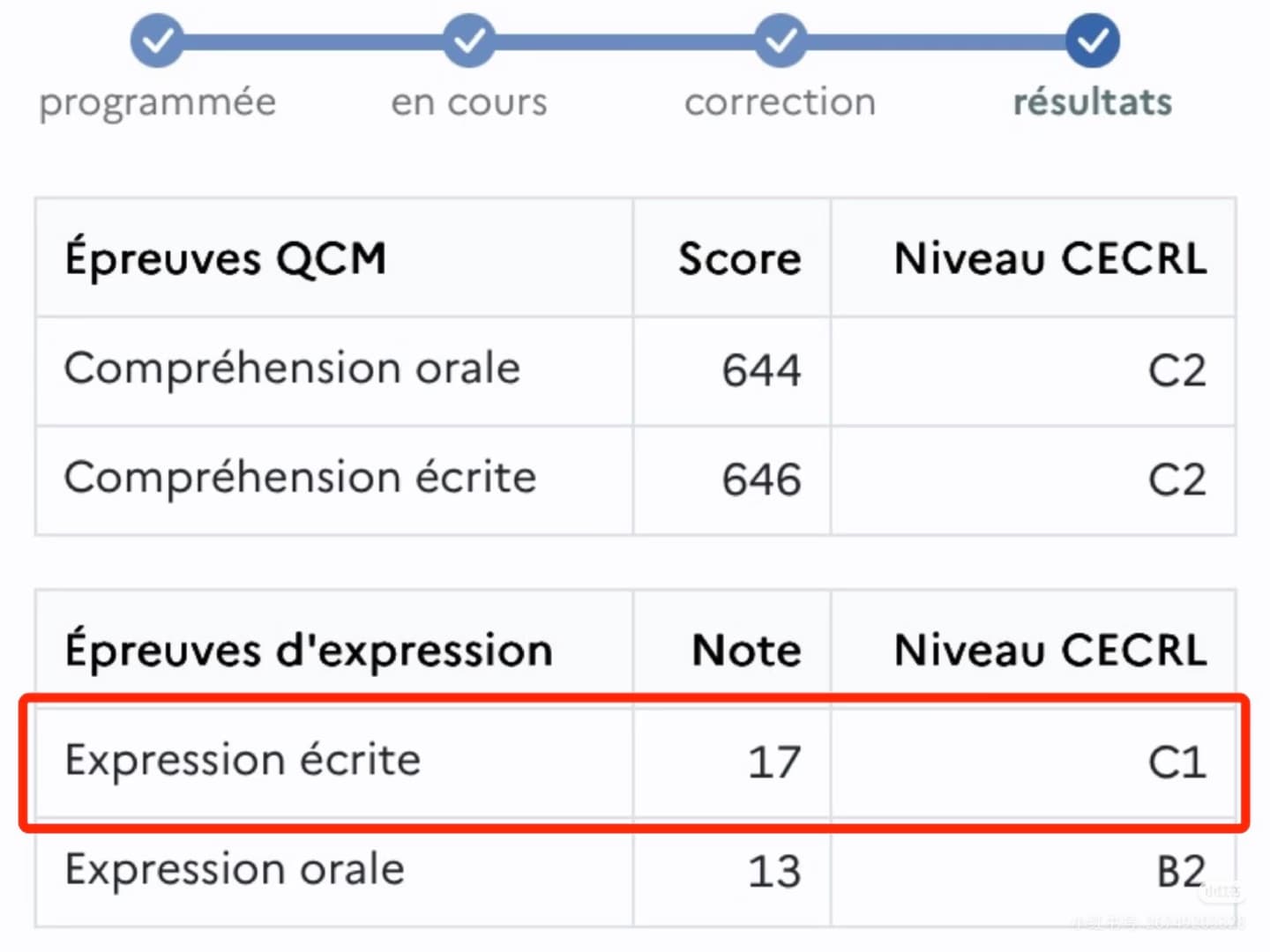
The role of Task 3
Today I am continuing with the third TCF writing task and the preparation method I used.
During my preparation, I found Task 3 relatively comfortable. It also carries the highest score contribution, so practising with a reliable structure can be especially worthwhile.
Before sharing my own approach, I want to thank the creators whose notes helped me prepare. I hope this version is useful to the next person too.
Two templates
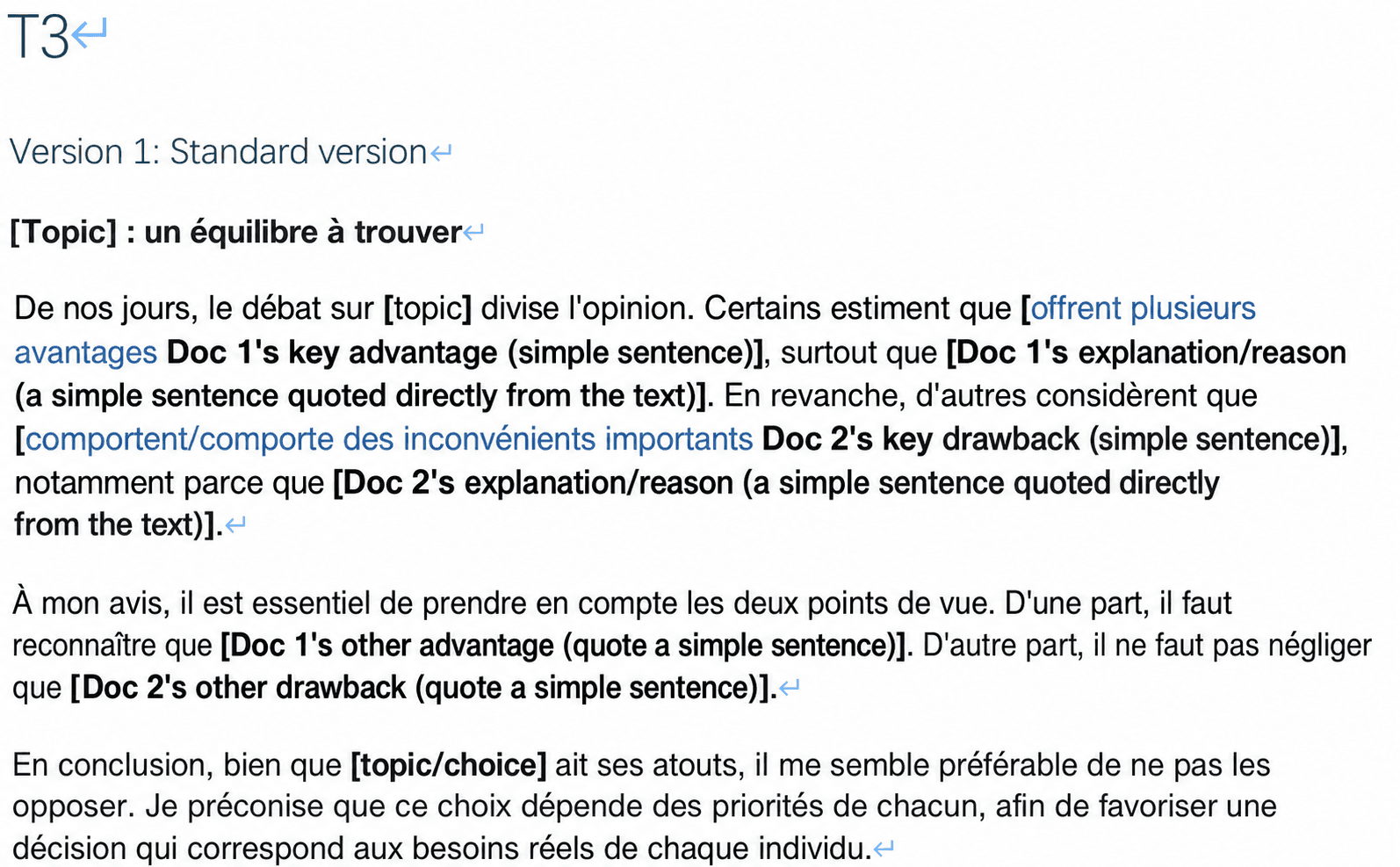
For Task 3, I prepared two versions of a writing template. I used the first version for my first two exams and scored 13 in writing both times.
I then refined it to fit my own writing preferences and created my own version.
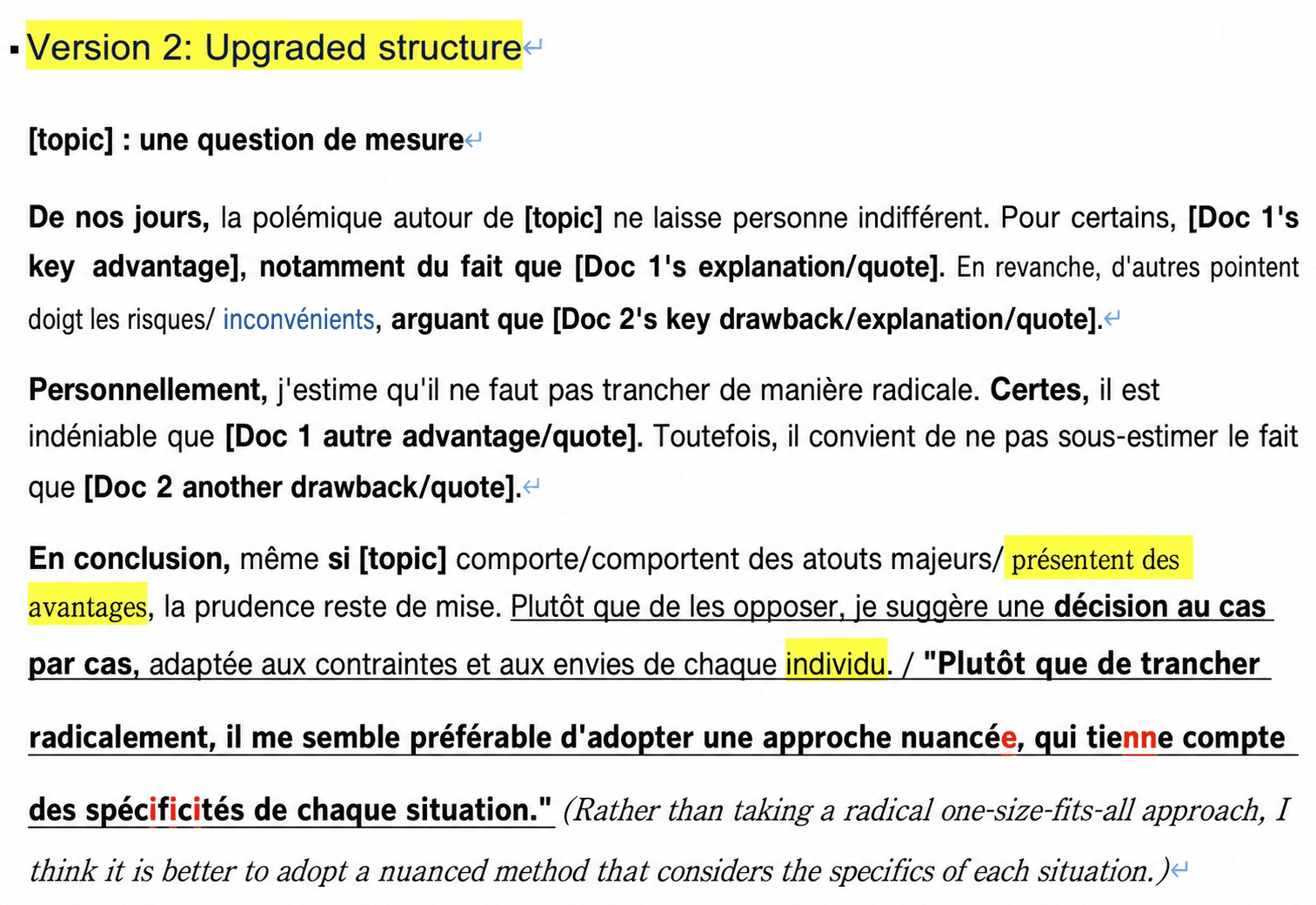
The key features of my version are shown in Figure 4.
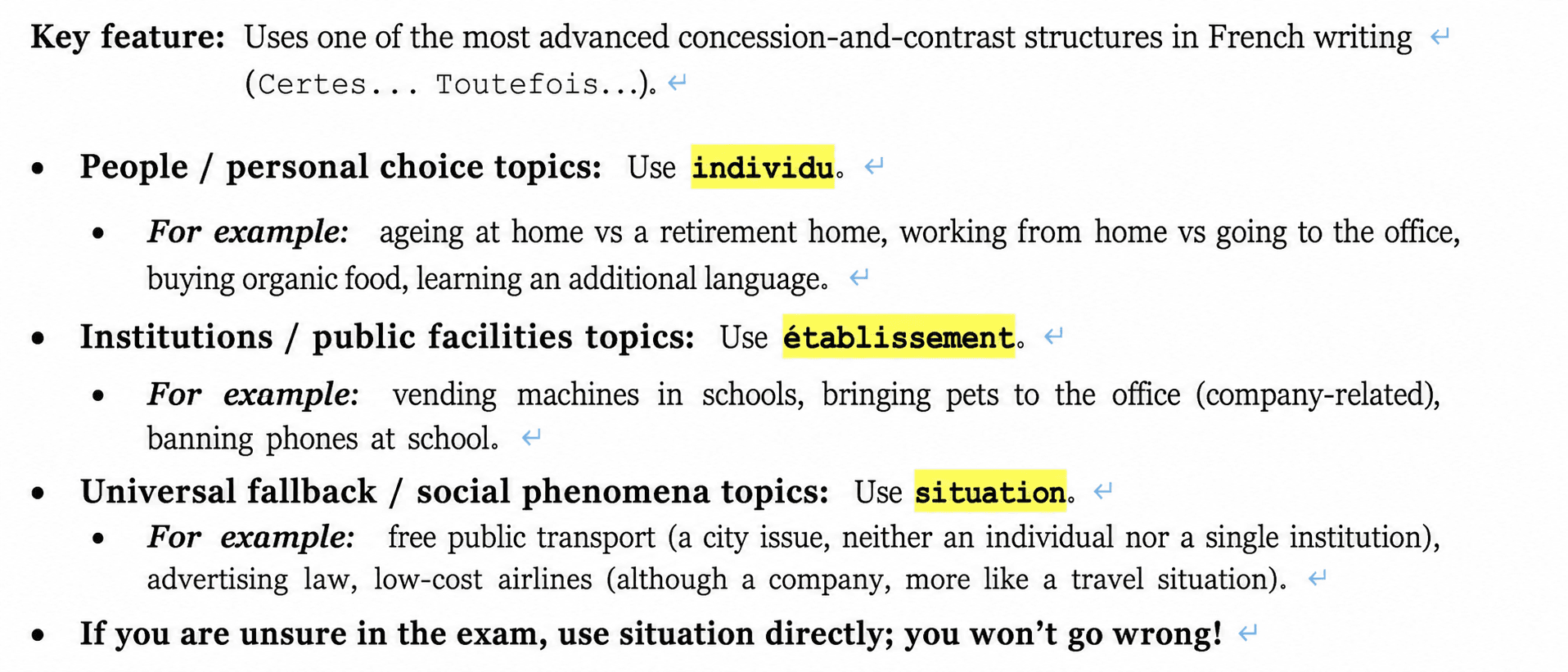
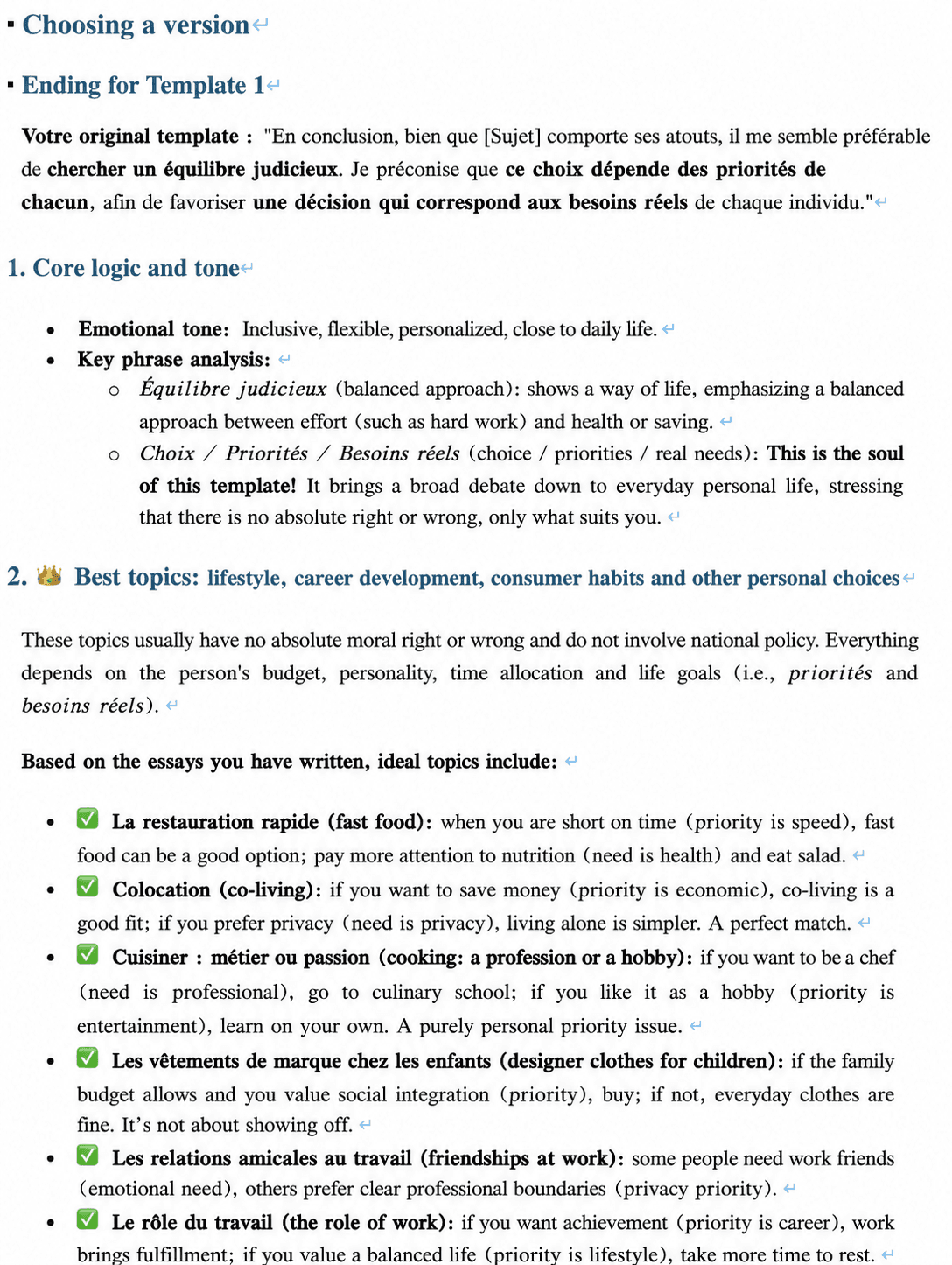
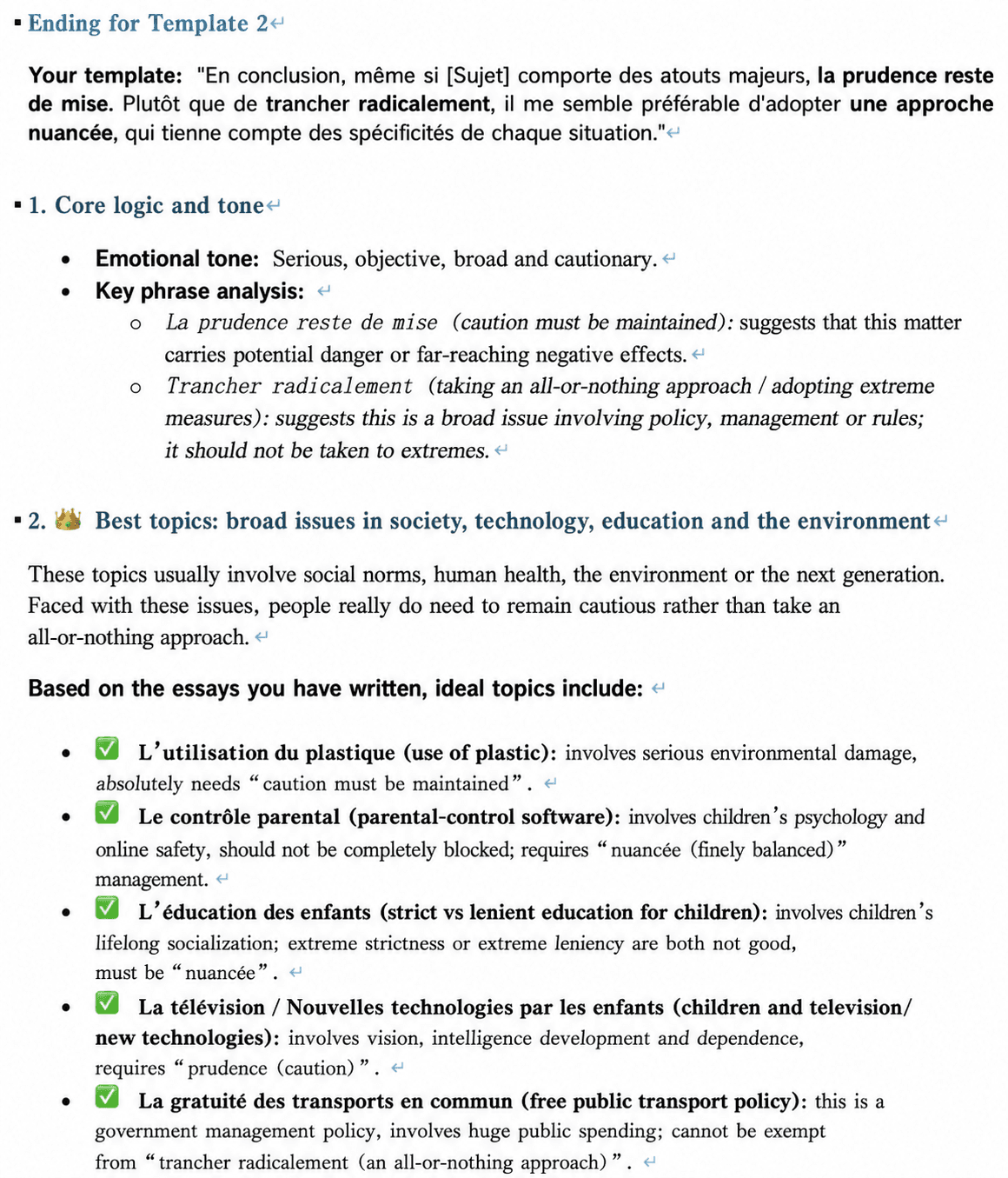
To decide which version to use, I previously asked AI to compare them. The summaries are shown in Figures 5–6.
How I chose a structure in the exam
After reading the prompt in the TCF exam, I asked myself one question:
“Is this debate a serious problem that a country, society or school needs to solve, or is it a dilemma that an ordinary person faces in daily life?”
- If it is a daily-life dilemma or lifestyle choice → I directly wrote Template 1 (Équilibre et Priorités). _Examples: e-books or paper books? Online shopping or physical stores? Renting or buying a home? Independent travel or a package tour?_
- If it is a serious problem, policy issue or risk → I directly wrote Template 2 (Prudence et Nuance). _Examples: online classes replacing physical schools? Artificial intelligence replacing humans? Mandatory veganism?_
Personal study notes, not official TCF guidance.