After Three 9/20 Scores: What I Changed for TCF Speaking Task 2
The mistakes I made with question lists, the two-minute prep routine I now use, and how I practise a real back-and-forth for TCF Speaking Task 2
I was happy to hear that my Speaking Task 1 post helped so many people. This time, I want to share how I prepared for Task 2.
Speaking was the part of TCF Canada that made me doubt myself the most. My four speaking scores were 9 → 5 → 9 → 9. After I requested a review of the fourth result, it changed to 13/20, or B2.
I am not sharing a perfect formula or a list that guarantees a high score. I am sharing what went wrong for me, what I changed, and how I turned Task 2 into something I could practise each day.
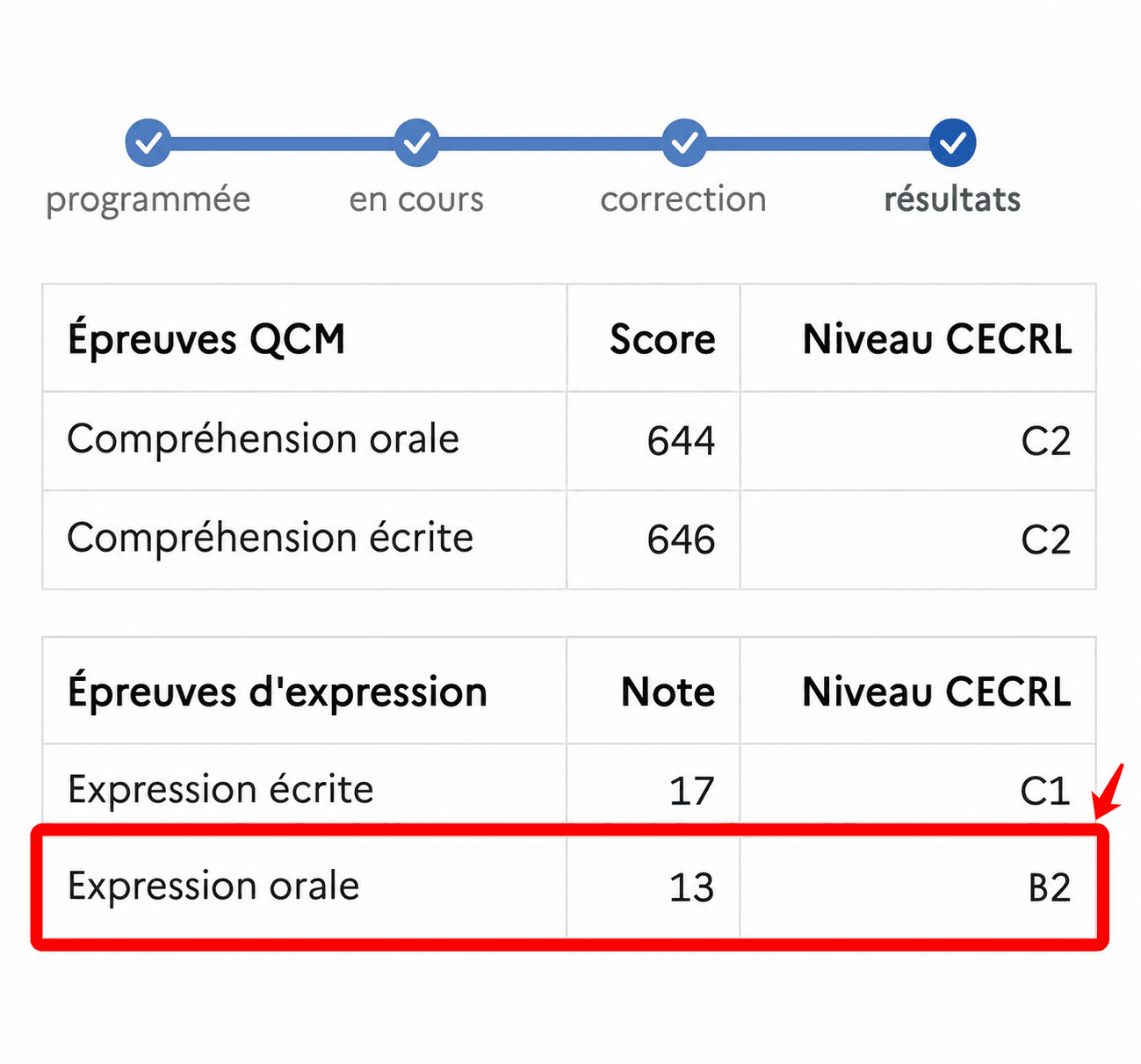
When a conversation becomes a questionnaire
At first, I prepared questions by category: time, place, people, price, details and so on. My only goal was to come up with enough questions.
This helped in the beginning. I could look at a prompt and say something instead of freezing.
But after a while, I noticed a problem. I would ask ten prepared questions in order, no matter what the examiner said. Task 2 started to sound like a survey in French. I was asking questions, but I was not having a conversation.
That made me ask a more useful question: what is Task 2 meant to test?
The France Éducation international page for TCF Canada explains that speaking is assessed through language ability, interaction, organisation and whether your language fits the situation. Grammar matters, but it is not the whole task.
For me, a good Task 2 performance needs three things:
- My questions must relate to the prompt.
- They must be clear and suit the relationship in the role-play.
- I must understand the reply and use it to keep the exchange going.
What I do during the two-minute preparation time
1. Work out who I am speaking to
Is the other person a friend, colleague or neighbour? Or am I speaking to an employee, landlord or manager?
This tells me whether to use tu or vous. It also sets the tone of my opening. Getting the relationship wrong at the start can create a poor first impression.
2. Build one route through the topic
I do not write full sentences. I jot down keywords in a useful order.
For a sports club prompt, my notes might look like this:
activités → niveau → horaires → durée → lieu → tarif → matériel → inscription
I turn those words into questions as I speak:
- Quels types de cours proposez-vous ?
- Est-ce qu’il y a des cours pour débutants ?
- Quels sont les horaires ?
- Combien de temps dure une séance ?
- Le matériel est-il compris dans le tarif ?
- Comment faut-il faire pour s’inscrire ?
Keywords are easier to move around than complete sentences. They also stop me from spending the whole two minutes writing a script.
3. Keep two or three backup directions
I still use the seven areas from my old notes:
- Time and deadline
- Place and transport
- People involved
- Price and what is included
- Practical details
- Conditions and limits
- Registration or next steps
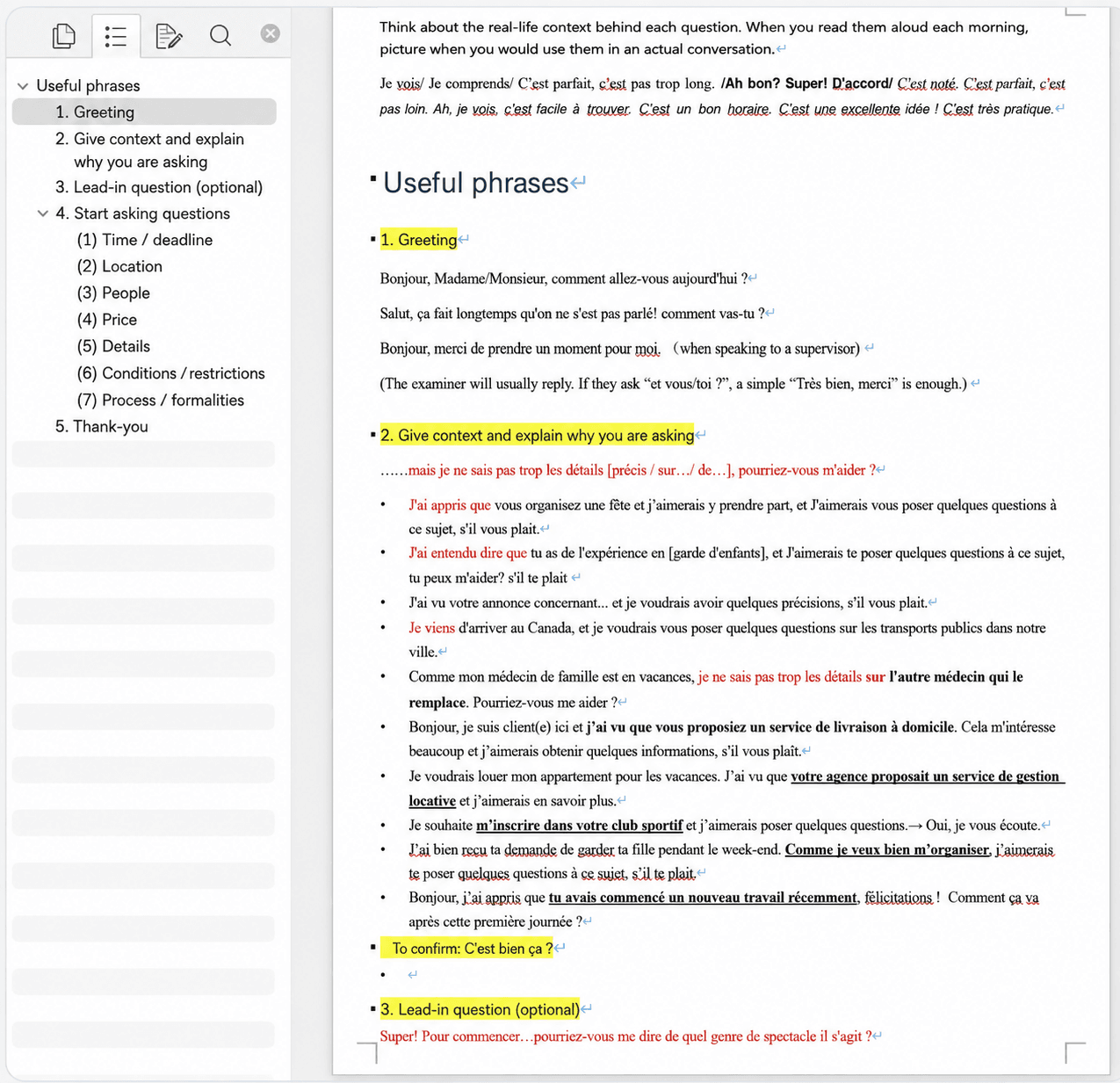
I now treat these as fallback options, not a checklist. I use one when I need a new direction.
If I am asking a friend for interview advice, for example, questions about price and transport make no sense. I would ask about clothes, preparation, behaviour, common mistakes and what to do if something goes wrong.
Three small habits that make Task 2 sound like a conversation
1. React before moving on
After the examiner answers, I try not to jump straight to an unrelated question. A short reaction is enough:
- D’accord, je vois.
- Ah bon ?
- C’est très pratique.
- Ça me convient bien.
- C’est un peu cher, mais le prix me paraît raisonnable.
The reaction has to fit the answer. Saying “Super !” after every reply sounds automatic. It may also make the examiner wonder whether I understood.
2. Confirm a detail when it helps
If the reply contains a lot of information, I can check one point:
Si j’ai bien compris, le matériel est compris dans le tarif, c’est bien ça ?
This shows that I followed the answer. It also gives me a moment to form my next question.
3. Turn the reply into the next question
The examiner's answer is often the best source for a follow-up.
If they say that evening classes are available, I can ask:
D’accord. Et les cours du soir commencent à quelle heure exactement ?
If they say that I need to bring my own equipment, I can ask:
Je vois. Quel matériel faut-il apporter ?
I stopped looking for ten “universal questions”. The harder and more useful skill was learning to catch one part of an answer and continue from it.
A flexible conversation framework
This is one way to handle the sports club prompt. The opening stays short. I begin with a broad question, then narrow the topic based on the reply.
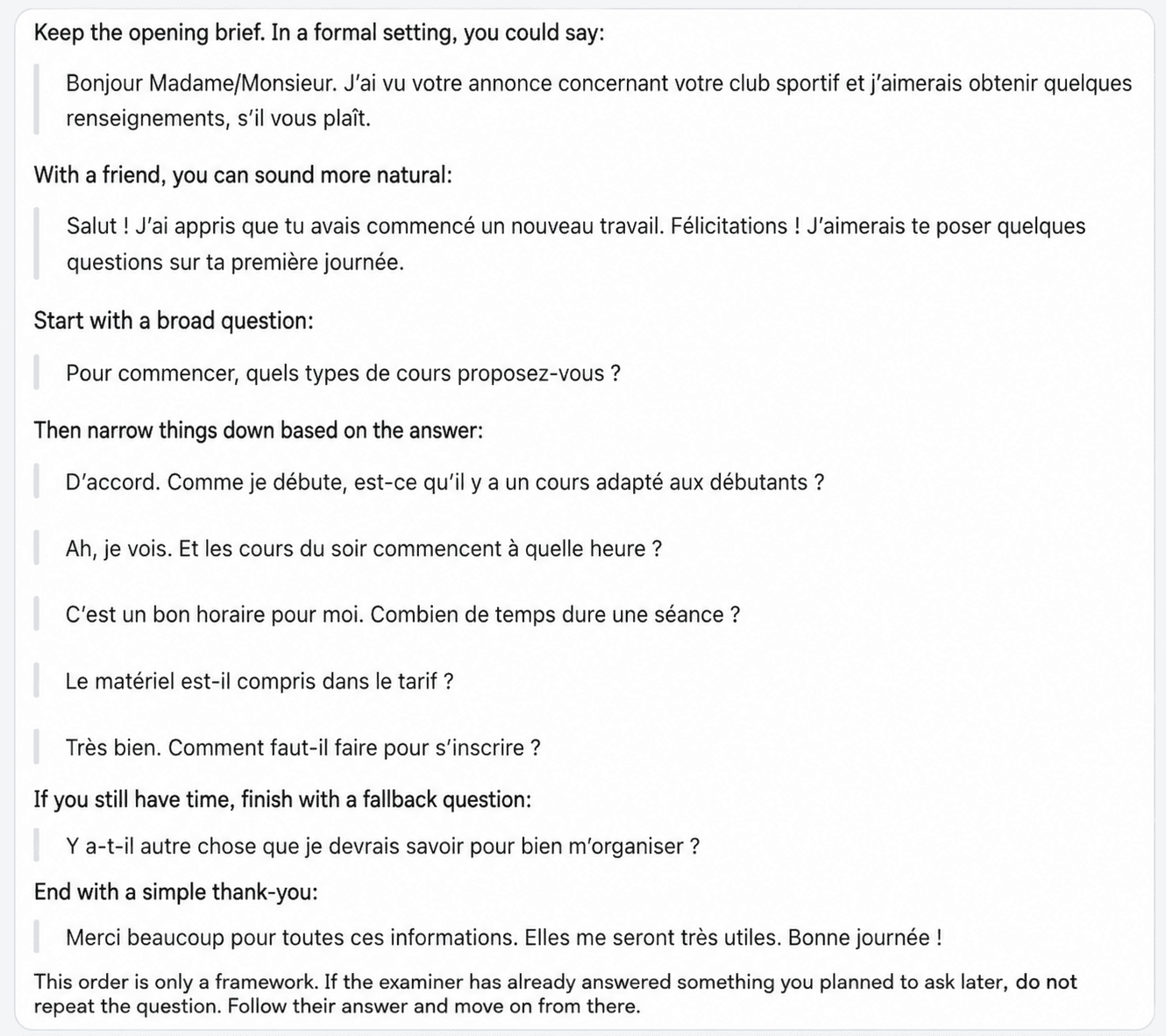
This is a guide, not a script. If the examiner has already answered something I planned to ask later, I do not ask it again. I follow the answer instead.
Some prompts need a different approach
Not every Task 2 prompt fits time, place and price.
Asking a friend for interview advice
I would focus on what to wear, how to prepare and what to avoid:
- Qu’est-ce que tu me conseilles de porter ?
- Comment est-ce que je devrais me préparer ?
- D’après toi, quelle erreur faut-il absolument éviter ?
- Et si je ne comprends pas une question, qu’est-ce que je devrais faire ?
Learning about work culture in Canada
If the prompt asks me to compare Canada with my own country, I first ask for information and then add one short point about my experience:
Au Canada, combien de jours de congé les employés ont-ils généralement ? Chez moi, cela dépend beaucoup de l’entreprise. Est-ce pareil ici ?
Asking about an item a friend is selling
I would ask what the item is, how old it is, what condition it is in, the price and how to collect it.
The task comes first. My goal is to complete the role-play, not to prove that I memorised a list of questions.
How I practise
Stage 1: keywords only
I look at a prompt and give myself two minutes to list keywords. I do not speak yet. I do not try to make the notes sound impressive.
Stage 2: turn the keywords into different question forms
I check whether every question begins with the same pattern:
Est-ce que…
Est-ce que…
Est-ce que…
Then I replace some of them with forms such as:
- Quel / Quelle…
- Combien…
- Comment…
- Depuis quand…
- À quelle heure…
- Quelles sont les conditions…
- Pourriez-vous me préciser…
Stage 3: practise the interaction
This was the part I could not reproduce by speaking to an empty room. I did not know what the other person would say, so I could not practise listening and adapting.
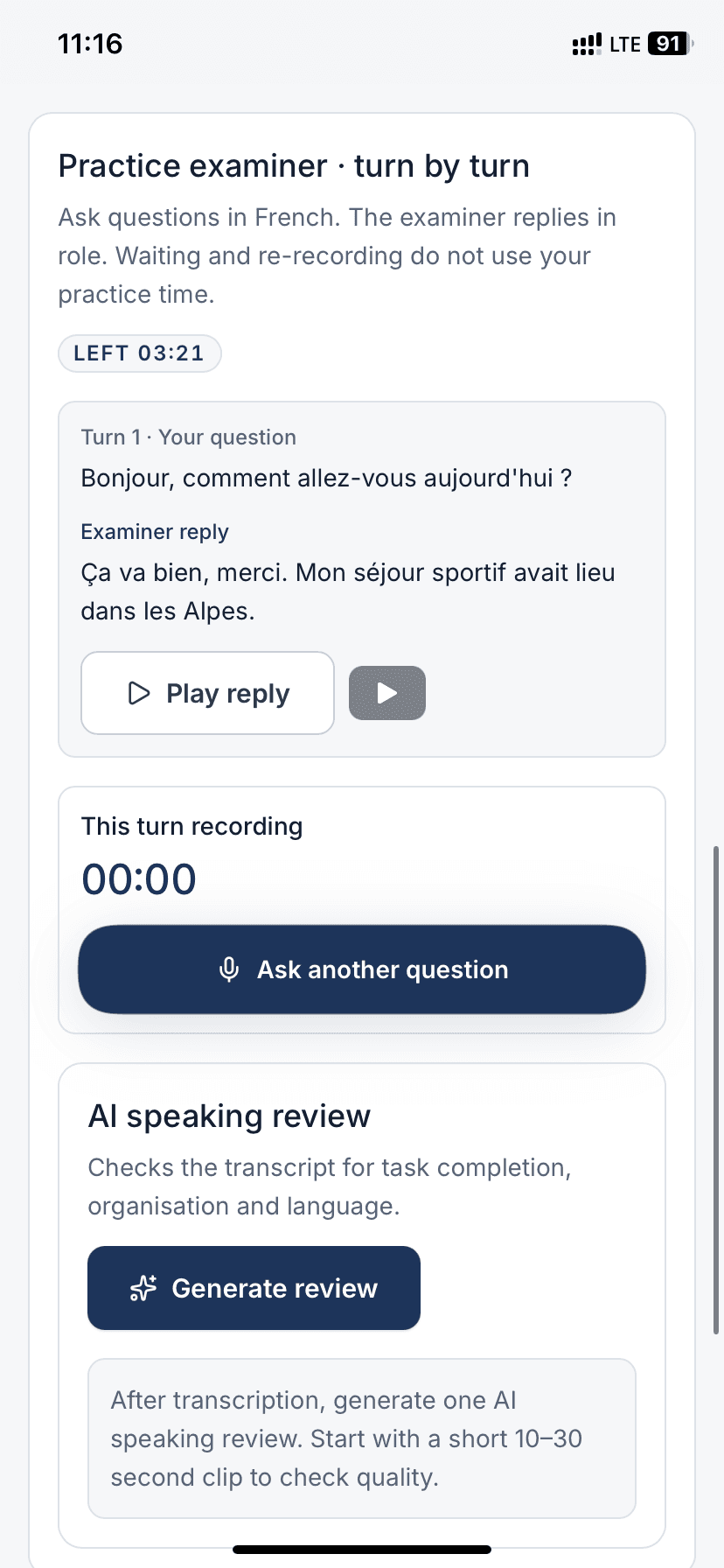
That is why I built this into the CaTCF Speaking Task 2 practice page. I can choose a prompt, use the two-minute preparation timer and then complete the full 3:30 interaction.
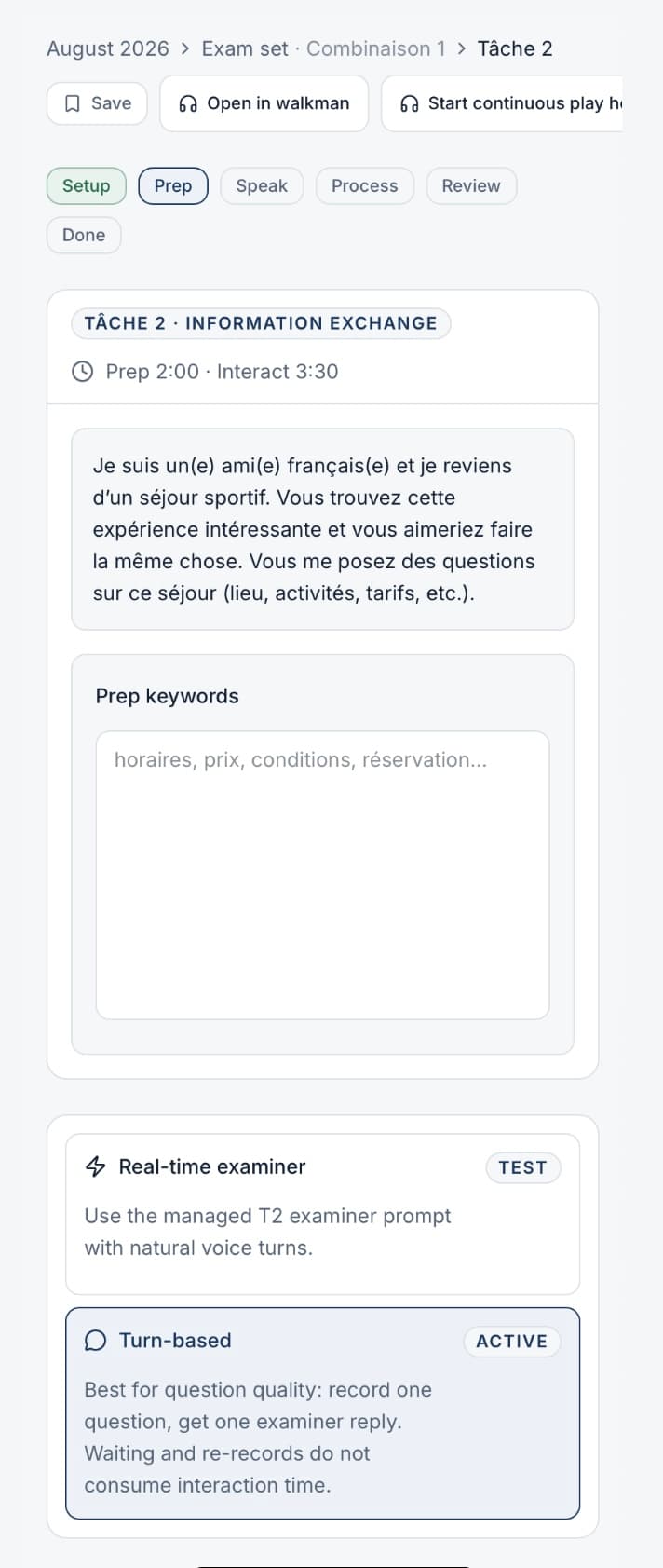
In the turn-by-turn mode, I record one question and receive one reply from the practice examiner. The examiner stays in the role from the prompt. Waiting and re-recording do not use the interaction timer, so I can focus on the quality of each question.
At the end, I can read the full transcript and generate an AI speaking review. I use it to spot missed parts of the task, repeated question forms and phrases that sound unnatural.
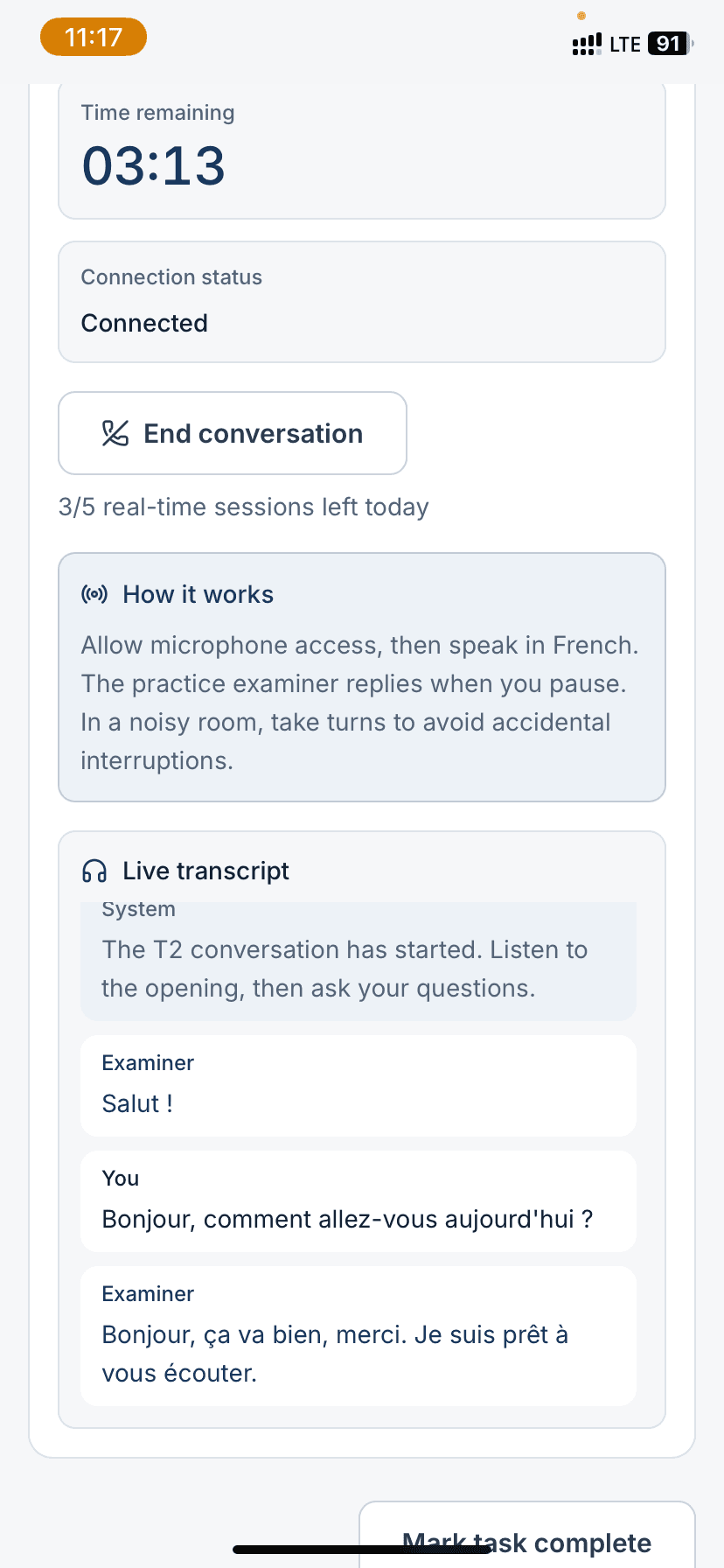
CaTCF is also testing a real-time examiner mode. It allows a continuous voice exchange in French and produces a live transcript. Access may depend on the account while the feature is still being tested.
The AI review is practice feedback, not an official score. It cannot replace the real exam. What it can do is turn vague problems into something I can work on in the next attempt.
Stage 4: fix only three things
I do not try to fix ten problems at once. After each attempt, I choose the three most obvious ones:
- Did I respond to the previous answer?
- Did I rely on one question form too much?
- Did I switch between tu and vous when I got nervous?
I repeat the same prompt and work on those three points first.
Mistakes I try to avoid
- Spending too long on the opening and leaving too little time for questions.
- Writing full sentences during preparation.
- Ignoring the examiner's answers and working through a fixed list.
- Saying “Super !” after every reply.
- Forcing complex inversion that I cannot use with ease.
- Asking about time, place and price when they do not fit the prompt.
One last thought
If your mind still goes blank when you see a Task 2 prompt, start with keywords. Turn them into questions once that feels easier. Work on the back-and-forth last.
It takes time. But after enough practice, the questions stop feeling borrowed and start sounding like your own French.
Good luck with your preparation ☀️
Personal study notes, not official TCF guidance or scoring advice.